Lifestyle · Longevity
Training after 40: how to build strength and protect your health
Training after 40 matters more, not less. Dr Matt Walley on building strength, protecting your joints, and training for longevity at Inception Gym Christchurch.
By Dr Matt Walley · 11 May 2025
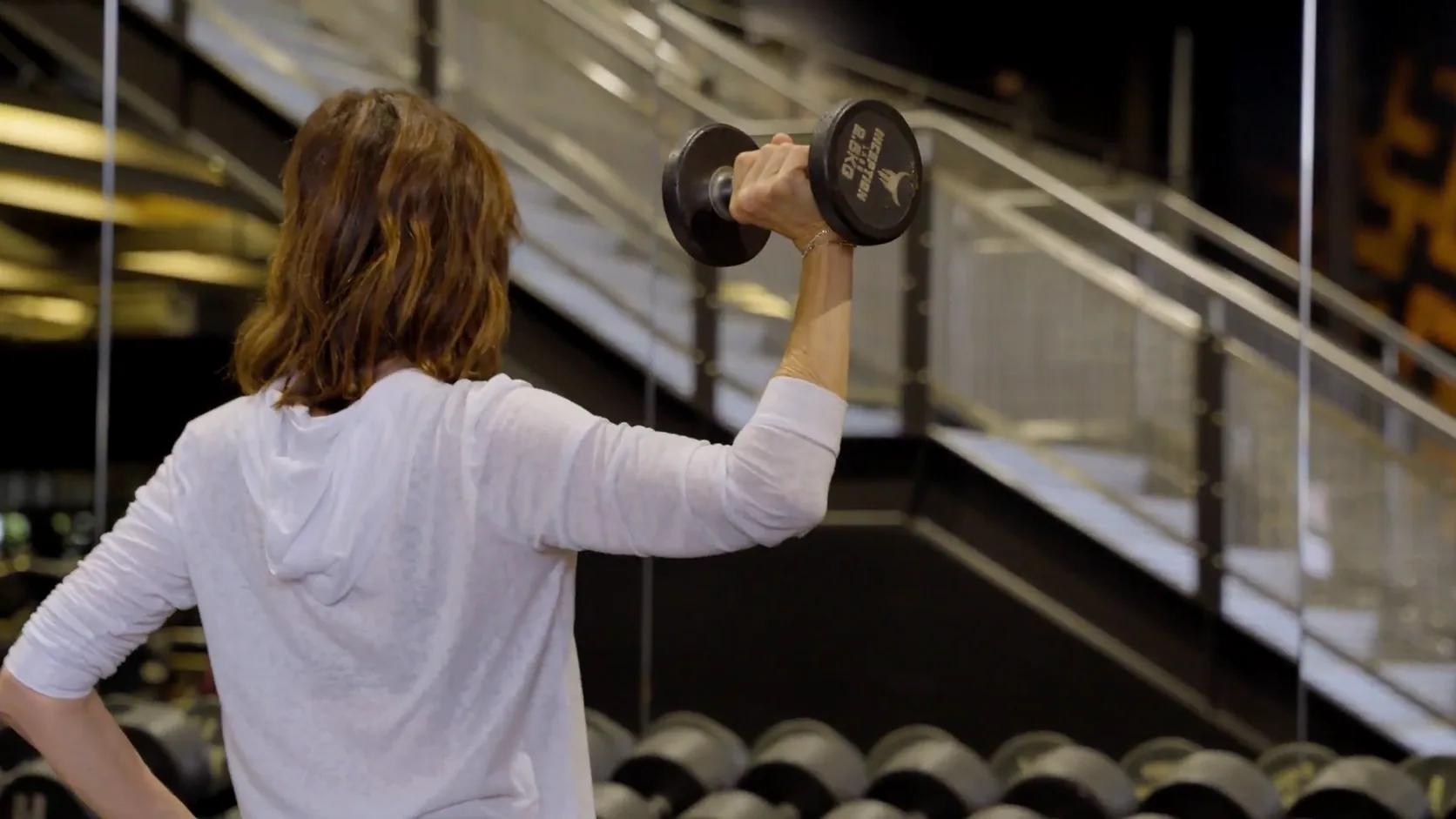
Training after 40 matters more, not less. Resistance training is the single most effective way to protect your muscle, bone, and independence as you age, and starting or restarting at 40 is not too late. It is close to ideal timing.
I am Dr Matt Walley. I co-founded Inception Gym in Christchurch with my wife Elise in 2022, and I am on the floor most days. A large share of the members I speak with are over 40, and almost all of them arrive carrying the same quiet worry: that they have missed the window. They have not. This is the guide I wish I could hand every one of them on day one.
Key takeaways
- Muscle loss accelerates through your 40s and 50s, and progressive resistance training is the only proven way to reverse it.
- The fundamentals do not change with age. Progressive overload, compound movements, and real intensity still drive results.
- What changes is the margin. Warm-ups, joint-friendly variations, sleep, and protein all carry more weight after 40.
- The strongest reason to train is what you want to be capable of at 70, not how you look this summer.
Why does resistance training matter more after 40?
There is a persistent and damaging myth that serious training is a young person's pursuit. That after 40 the sensible move is to ease back, switch to gentle cardio, and accept that your best years are behind you. I hear it every week, and the evidence points hard in the opposite direction.
Resistance training becomes more important with age, not less. The members I watch train intelligently through their 40s, 50s, and 60s do not just hold their health steady. They protect capabilities that inactive people their age quietly lose and cannot easily win back.
The 2026 longevity research has made this even harder to argue with. A large study following women aged 63 to 99 found that a grip-strength gain of roughly 7kg was tied to about 15 percent lower mortality, and separate work found female lifters carried around 12 percent lower all-cause mortality. Strength is not vanity after 40. It is a survival signal.
The gym is not a place you go to get ready for something. It is the habit that decides what kind of person you are physically capable of being for the rest of your life.
What actually changes after 40
Understanding the shifts helps you train around them rather than ignoring them or surrendering to them.
Sarcopenia: the muscle loss problem
Sarcopenia is the age-related loss of skeletal muscle mass and strength. It begins gradually in the 30s and accelerates through the 40s and 50s. Left alone, the average person loses 3 to 8 percent of muscle mass per decade after 30, and the rate climbs after 60.
The consequences are real: reduced strength, slower metabolism, higher fall risk, and less capacity for everyday physical tasks. Muscle mass is also a major factor in how well people recover from illness and surgery.
Progressive resistance training is the most effective intervention known for preventing and reversing sarcopenia. Not walking. Not swimming, though both have their place. Loading muscle against progressive resistance over time is the irreplaceable component.
Hormonal changes
Testosterone and growth hormone decline gradually from the late 20s onward in men. For women, perimenopause and menopause bring significant hormonal shifts that affect body composition, bone density, and recovery. These changes affect how readily muscle is built and how quickly you recover between sessions. Resistance training is one of the few levers that pushes back on bone-density loss directly, which is why I never let a member over 40 treat lifting as optional.
The response is not to stop training. It is to train consistently and pay closer attention to the factors that support recovery: sleep, nutrition, stress, and sensible programming.
Recovery takes longer
Younger trainees can often train hard, sleep moderately, eat adequately, and recover in 48 hours. After 40, recovery leans much harder on getting the supporting factors right. Sleep quality matters more. Protein matters more. Managing session frequency to allow genuine recovery matters more.
That does not mean training less hard. It means the 22 hours outside the gym become more directly connected to the quality of what happens inside it. I treat rest days as scheduled training, not gaps between it.
Joint health needs more attention
Tendons and ligaments lose elasticity with age, and connective tissue carries decades of wear. That does not make your joints fragile. It means extreme ranges under heavy load, sudden jumps in volume, and lazy warm-ups are more likely to bite than they were at 25. Intelligent programming respects this with appropriate loading, joint-friendly patterns, real warm-ups, and sensible volume.
What shouldn't change after 40
The fundamentals of effective training do not change with age.
Progressive overload still works. Muscle still adapts to progressive increases in load and volume. Adaptation may be slower and recovery may need more management, but the mechanism is the same at 50 as at 25. The progressive overload guide walks through how to apply it without overreaching.
Compound movements are still central. Squats, deadlifts, presses, rows, and pulls remain the foundation at any age. The implementation may shift toward machine variations or adjusted ranges, but the movement patterns that build strength do not fundamentally change.
Intensity matters. Insufficient challenge produces insufficient adaptation at any age. The most common mistake I see in older trainees is dialling intensity down so far that the work stops being a stimulus. Being conservative about volume is sensible. Being timid about relative effort is not.
Practical adjustments that pay off
Warm up more thoroughly
What passed for a warm-up at 25 is not enough at 40 plus. Connective tissue needs more blood flow and gradual loading before heavy work, and a proper warm-up sharpens neuromuscular activation, which improves strength output in your working sets.
A practical warm-up for a strength session:
- Five to ten minutes of light cardio to raise body temperature.
- Mobility work for the joints involved: hips and ankles for lower body, shoulders and thoracic spine for upper body.
- Two to three progressive warm-up sets on your first movement, building toward working weight.
That adds ten to fifteen minutes but cuts injury risk sharply and often improves performance. Our gym warm-up routine lays out a full version.
Prioritise joint-friendly variations
Most exercises have several valid implementations that create different amounts of joint stress. Choosing the version that delivers the stimulus with the least joint stress is a sound rule after 40.
- Belt squats and pendulum squats instead of, or alongside, barbell squats for reduced spinal load.
- Plate-loaded chest press machines with rotating handles instead of a fixed-bar barbell press for less wrist and shoulder stress.
- Trap bar deadlift instead of conventional for a more upright torso and reduced lumbar stress.
- Machine rows alongside barbell rows for mid-back work with less lower-back involvement.
We built the equipment selection at Inception deliberately to cover every major movement pattern with options that minimise unnecessary joint stress. That is not about making training easier. It is about making it sustainable.
Manage volume before intensity
If you are returning after a break or ramping load, volume increases should come before intensity increases. Tendons and connective tissue adapt more slowly than muscle. You may own the muscular strength to lift a weight well before your tendons are conditioned to handle it repeatedly across a block.
My rule when a member increases load after 40: add sets before weight, hold a new volume for at least three to four weeks before adding significant load, and respect joint signals. Aching that persists between sessions warrants a load reduction or a movement swap.
Prioritise sleep and recovery
Sleep is the primary recovery window for training adaptation. Chronic sleep restriction lowers testosterone, impairs muscle protein synthesis, raises cortisol, and dulls cognition. For lifters over 40 already managing declining hormones, poor sleep stacks the deck against you. Seven to nine hours is the evidence-based target. If performance is sliding and recovery feels short, look at sleep before you touch your programme. If you want to go deeper, our rest days and recovery guide treats recovery as a discipline you schedule, not a reward you earn.
Protein intake matters more, not less
As I cover in the protein intake guide, the muscle protein synthesis response to a given protein dose drops with age due to anabolic resistance. Older adults need a higher per-meal dose to get the same response as younger adults.
Aim for a food-first approach. A total intake around 1.6 to 2.0 grams of protein per kilogram of bodyweight per day, split into 0.4 to 0.5g/kg per meal, is a reasonable adjustment for adults over 50. For a 90kg person, that is 36 to 45 grams per meal across three to four meals. This matters even more if you are training while on a GLP-1 medication, which I unpack in our GLP-1 and strength training guide.
The equipment advantage for older lifters
The depth and quality of our floor matters particularly for older lifters, because it gives you programming options most commercial gyms simply do not have.
A plate-loaded belt squat allows high-quality leg training without axial spinal loading. A pendulum squat gives you deep-range quad work with minimal spinal stress. With 43 plate-loaded machines and 72 machine variants across every major movement pattern, you can always find a joint-friendly version of the movement you need, whatever is limiting you on the day. The engineering brief I gave was heavy yet fluid: machines that load hard but track smoothly, so an old shoulder or a cranky lower back is a reason to change the tool, not skip the session.
That flexibility is the whole point. Some days a previous shoulder injury means barbell pressing is off the table. A quality machine alternative means the session still happens productively instead of being written off.
Owner-operated, evidence-led
One of the things that separates us from the big franchise gyms is that we are owner-operated. I hold a PhD, and I have spent years working through the evidence on training, nutrition, and longevity. That thinking shapes how the gym is equipped and run, and it is the reason I care more about a member still training pain-free at 60 than about a flashy launch photo.
For members over 40 navigating training around an old injury, that shows up in practical ways: an equipment selection chosen for joint-friendly options, free body composition scans for every member, and a free initial PT and nutrition consult for contract members. The answers you get from our team are grounded in evidence, not a sales script. If you want a hand building a plan around your history, our personal training in Christchurch is where I would start.
Nutrition and body scans
Training over 40 benefits enormously from objective data. Body composition scans, free for all Inception Gym members, tell you about muscle mass, fat mass, and body fat percentage. Far more informative than bodyweight alone, and a better yardstick than BMI, which cannot tell muscle from fat. They let you see whether your training is actually producing the changes you want.
Combining training data with scan results and a tailored nutrition protocol produces measurably better outcomes than training blind. Inception Nutrition runs PhD-led coaching built around your scan data and training demands. For older athletes, where the interaction between nutrition, hormones, and training is more complex, that structure earns its keep.
What are you actually training for?
The most useful frame for training after 40 reaches past aesthetics and short-term goals. The question is not "how do I look this summer." It is "what do I want to be capable of at 70."
The honest answer almost always involves enough muscle to move independently, enough bone density to avoid fractures, enough cardiovascular capacity for daily demands, and enough cognitive health to stay sharp. All of those are heavily influenced by resistance training held consistently across decades.
Starting, or restarting, at 40 is not too late. In many ways it is exactly the right time.
Come and train
If you are over 40 and weighing this up, do not overthink the first step. Walk in, use the floor, see how the equipment feels on your joints. Try a free 24-hour pass with no commitment, or book your free body composition scan so we can set a real baseline. If you want to compare the options first, our membership plans start at $18.90 per week. I am usually on the floor. Come and find me.
---
Inception Gym is at Tower Junction, 65 Blenheim Road, Addington, Christchurch. 24/7 access, 92 pieces of equipment designed for effective training at any age, and free body composition scans for all members.