Nutrition · Diet
How Much Protein Do You Actually Need? A Guide for Gym Members
How much protein you actually need to build muscle and recover: my food-first, science-backed guide for gym members in Christchurch. 1.6 to 2.0 g/kg targets explained.
By Dr Matt Walley · 30 December 2024
If you train with weights and want to build or keep muscle, your protein intake should sit between roughly 1.6 and 2.0 grams per kilogram of bodyweight per day, spread across three to four meals. For a 70kg person that is about 112 to 140 grams a day, food first.
I am Dr Matt Walley, and I co-founded Inception Gym in Christchurch in 2022 with my wife Elise. I have a PhD, I am on our training floor most days, and protein intake is the single nutrition question I get asked more than any other. So let me cut through the noise, because the noise around protein is loud, and most of it is trying to sell you something.
Key takeaways
- Aim for 1.6 to 2.0 g/kg of bodyweight per day if you train. Higher end during a fat-loss phase.
- Distribution beats timing. Three to four protein meals of 30 to 40g each beats one giant hit.
- Food first. Supplements solve a convenience or volume problem, they are not a moral requirement.
- Leucine is the trigger. Animal proteins and soy, pea and hemp deliver it best.
- Older lifters and plant-based lifters both need to aim slightly higher and plan more deliberately.
What protein actually does in your body
Muscle is built from protein, and your muscle protein is in a constant churn of building up and breaking down. Muscle protein synthesis builds new tissue. Muscle protein breakdown is the opposing process. You grow when synthesis outpaces breakdown over time.
Lifting stimulates synthesis, but it also stimulates breakdown. The net result depends on amino acid availability, and that can only come from the protein you eat. This is the part people miss: if you train hard but underfeed protein, you have provided the stimulus without the raw materials. I have watched members grind through months of good sessions and stall out, and nine times out of ten the training was not the problem. The kitchen was.
Protein is also the most filling of the three macros, and it drives immune function, enzyme production and most other processes in the body. For a gym member, muscle protein synthesis is the reason to pay attention.
How much protein do you actually need?
The honest headline number, drawn from the systematic reviews and meta-analyses I trust, is this.
For building muscle and improving body composition in people who train: 1.6 to 2.0 grams of protein per kilogram of bodyweight per day.
That range covers the large majority of people who walk through our doors. The research suggests the returns flatten out beyond roughly 2.2 g/kg, so eating more than that is not harmful, it is just not doing much for you.
Some quick reference points:
- A 70kg person: about 112 to 140 grams per day.
- A 90kg person: about 144 to 180 grams per day.
- A 55kg person: about 88 to 110 grams per day.
For most people those numbers are meaningfully higher than what they eat by default, which is exactly why this article exists.
What about the RDA of 0.8 g/kg?
The Recommended Dietary Allowance is 0.8 g/kg per day. That figure is the minimum to prevent deficiency in a sedentary adult, not the optimal amount for someone doing regular resistance training. Using it as your target if you lift is like using the smallest amount of fuel that keeps a car idling as your benchmark for a road trip.
Food first, always
Here is my strongest opinion on this whole topic, and I say it to members on the floor constantly.
Get 80 percent of your protein from food you chew before you spend a single dollar on a tub. If your diet is a mess, a scoop of whey will not save it.
The source of protein matters far less than your total daily intake, with one caveat worth knowing: leucine. Leucine is the amino acid most responsible for triggering muscle protein synthesis. Animal proteins, meat, fish, dairy and eggs, are leucine-rich, as are soy, pea and hemp among the plant options.
Some real whole-food anchors and their approximate protein content:
- 100g chicken breast: about 31g
- 100g tuna, canned in water: about 25g
- 200g Greek yoghurt: about 20g
- 3 large eggs: about 18g
- 100g lean beef mince: about 26g
- 200g cottage cheese: about 24g
- 100g tofu: about 17g
- 200g cooked lentils: about 18g
Hitting 140 to 160 grams a day from food is entirely achievable with a bit of meal planning. If you are already getting there, supplements are optional. Genuinely optional. I would rather see you eat a proper breakfast than drink a shake on top of a diet that skips one.
Does protein timing matter?
Less than the supplement industry wants you to believe. The old "anabolic window", the idea that you must get protein in within 30 minutes of training or lose the gains, has been largely walked back as a rigid rule. Here is what the evidence actually supports.
Distribution beats immediate post-workout timing. Spreading protein across three to four meals produces better synthesis outcomes than the same total in one or two big doses. The response per meal has a ceiling, roughly 0.4 g/kg, so 150 grams at dinner does not do what 40 grams across four meals does.
The post-workout window is wider than people fear. Getting protein in within a couple of hours of training is good for recovery. A protein-rich meal beforehand extends that window further. Eat reasonably close to your session and move on. Obsessing over the stopwatch is wasted energy.
Pre-sleep protein is a real edge. Research out of Maastricht University found that 30 to 40 grams of slow-digesting protein before bed, casein or a mixed source, supports overnight recovery. If you train in the evening, this is a lever worth pulling.
Where supplements genuinely earn their place
I sell supplements. I still tell people food first. Both things are true, because a good supplement solves a specific problem, it does not replace a diet.
- Convenience and consistency. On a flat-out day, a shake can be the difference between hitting your number and missing it by 40 grams.
- Post-training practicality. Cooking within an hour of every session is not realistic for most working people. A shake at the gym covers it cleanly.
- Appetite management. Some people, especially in a surplus, cannot chew their way to target. Shakes are less filling per gram.
- Travel and disruption. When routine breaks, a quality protein keeps intake on track.
That is the honest case for supplementation. Four situations. If none of them apply to you, you may not need a tub at all.
The Inception Labs Collagen Whey
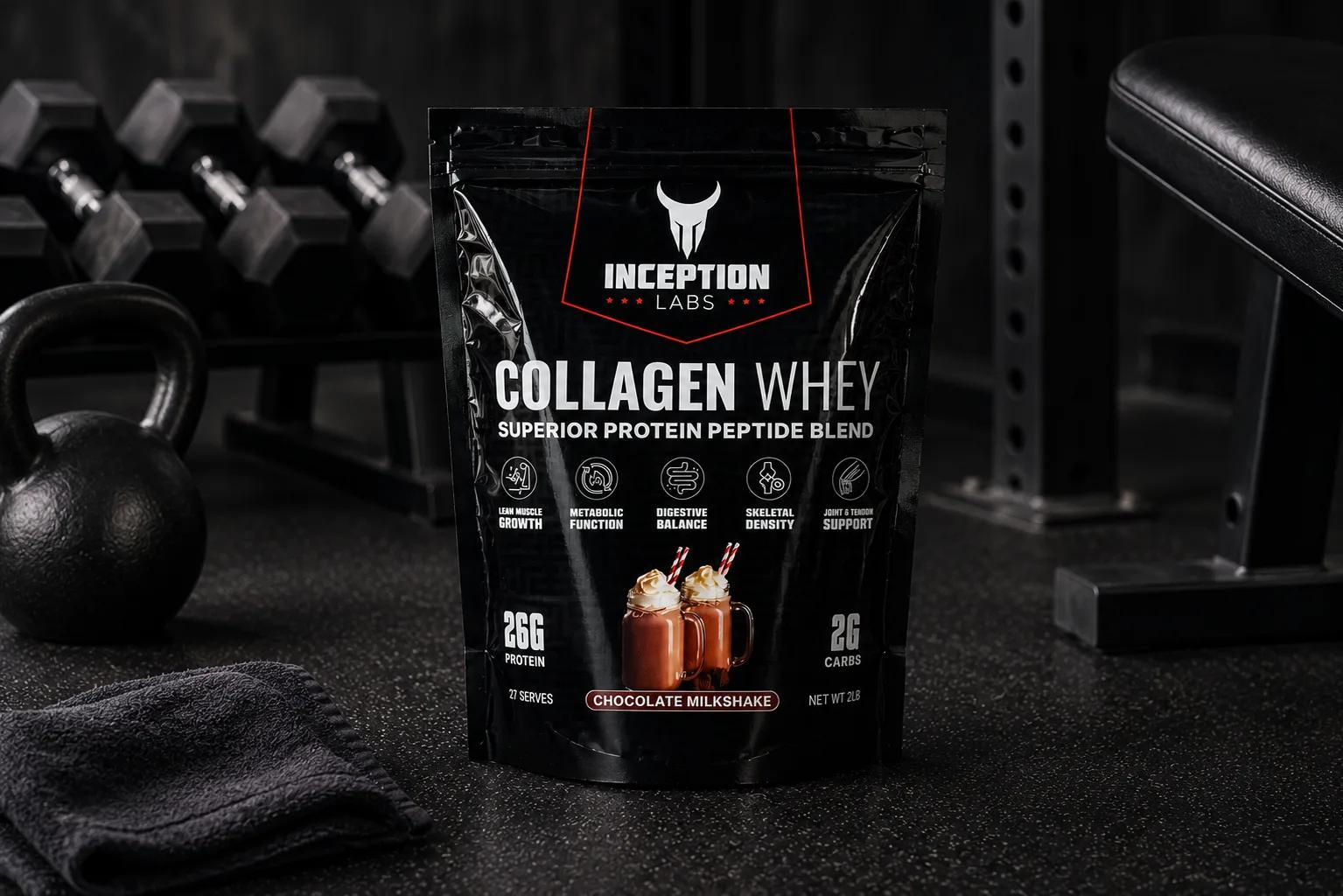
The Inception Labs Collagen Whey Protein is the one I formulated for our own members, and it does something most proteins do not. It pairs whey isolate, high in leucine and fast to absorb for muscle synthesis, with bovine collagen, which supplies the glycine, proline and hydroxyproline your tendons, ligaments and cartilage use for repair.
Most proteins target muscle and stop there. If you are loading your joints heavily, particularly if you are over 35 or working around an old injury, the connective-tissue side is worth having in the mix. Members get up to 40% off Inception Labs products at our on-site Supplement Solutions store. See the full range and member pricing.
Special cases worth knowing
Protein during fat loss
In a calorie deficit your protein needs go up, not down. The body is more willing to strip muscle for energy when calories are restricted, and higher protein is the protective signal that spares lean mass while you lose fat. During a cut I push people toward the upper end of the range, and 2.2 to 2.4 g/kg is a defensible ceiling for holding muscle.
This matters more than ever now that GLP-1 medications are common. Rapid weight loss without adequate protein and resistance training costs you muscle you do not want to lose. I wrote about that specifically in my guide to training and protein while on GLP-1 medication, because it is a conversation I now have weekly on our floor.
Protein for older lifters
The muscle-building response to a given dose of protein softens with age. Older adults, generally 50 and up, need more protein per meal to get the same result, so aim for 0.4 to 0.5 g/kg per meal rather than 0.3 to 0.4. This is one reason training after 40 rewards deliberate attention to protein.
Plant-based lifters
You can absolutely hit targets on a plant-based diet, it just needs planning. Lower leucine content in most plant proteins means either your total climbs higher, toward 2.2 g/kg or above, or you select for leucine with soy, pea and hemp and combine complementary sources across the day. A plant-based lifter who does not track is at real risk of undershooting.
How to actually raise your intake
If you are well below range, you do not need to blow up your whole diet. Small, repeatable moves.
- Anchor every meal on a protein source. Decide the protein first, build the rest around it.
- Front-load the morning. Breakfast is where protein most often collapses. Eggs, Greek yoghurt, cottage cheese or a morning shake sets a better trajectory than a carb-only start.
- Bolt protein onto existing habits. A yoghurt in your routine, a shake post-training, an extra chicken breast in a meal you already eat. It accumulates.
- Track for two weeks. Log intake in an app for a fortnight. The gap between what people assume they eat and what they actually eat is the single most useful surprise in this whole topic.
If you want help turning these numbers into a plan built around your own body, come and use our free body composition scan in Christchurch. Every member gets it, and it turns guesswork into a starting line.
Build the plan around your own body
Generic numbers get you 90 percent of the way. Your training volume, goals, age and composition decide the last 10. A protocol built from your scan data will always beat a formula from a blog, including this one.
If you are not training with us yet, the easiest first step is a free trial. Come in, use the floor, get your first scan, and let us help you set a protein target you can actually hit. Hit your number, spread it across the day, keep the quality high, and use supplements only where they solve a real problem. That is the whole game.
For the wider picture on eating to train, read my gym nutrition basics guide next.
---
Inception Labs supplements, including the Collagen Whey Protein range, are available on-site at the Inception Gym Supplement Solutions store at member pricing. Tower Junction, 65 Blenheim Road, Addington, Christchurch. 5.0 across 1,090+ Google reviews.