Nutrition · Supplements
Creatine monohydrate: benefits, dosing, and why Creapure matters
Creatine monohydrate is the most researched supplement in sport science. Dr Matt Walley on the benefits, correct dosing, creatine for women and over-50s, and why Creapure is the reference standard.
By Dr Matt Walley · 8 July 2025
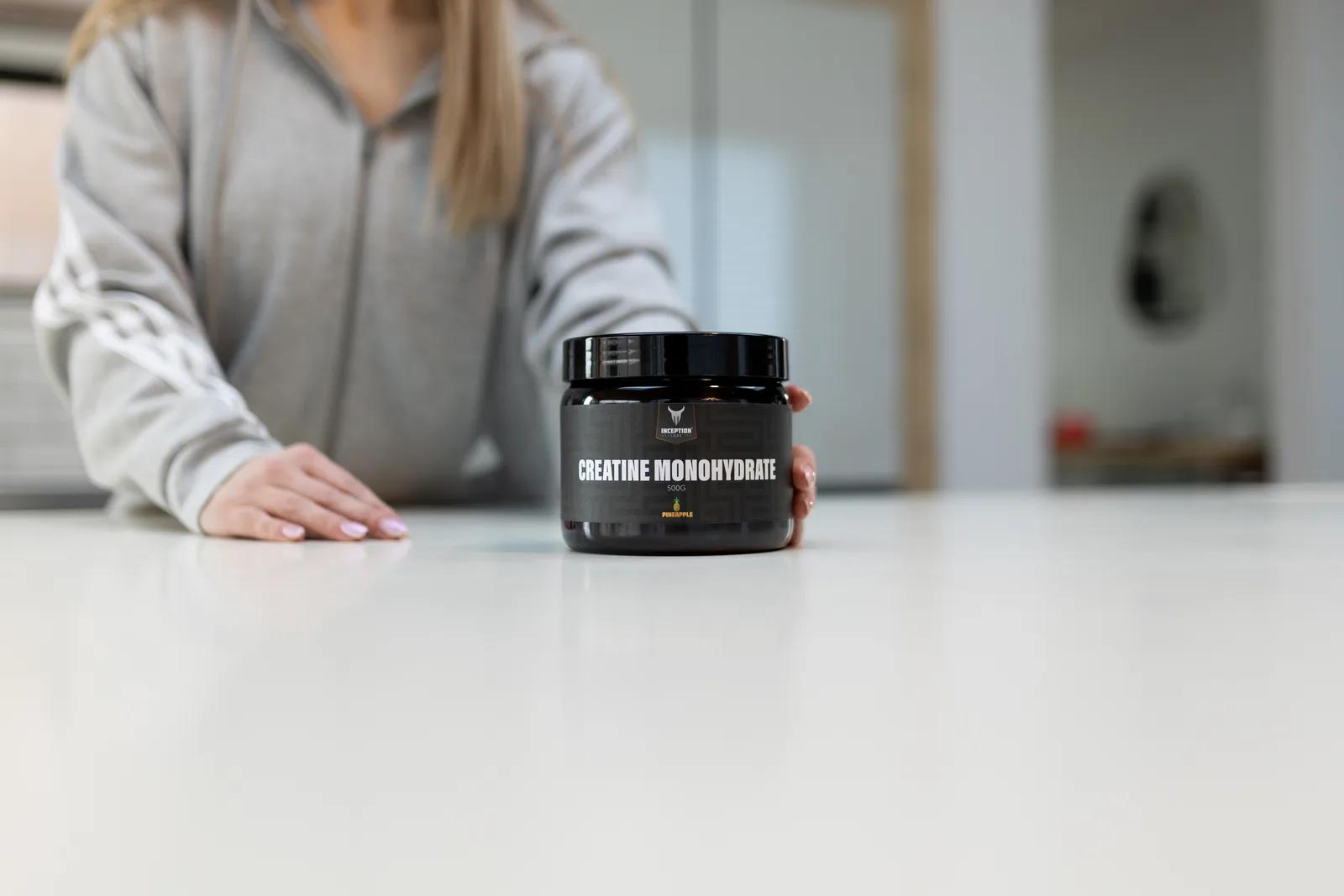
If you could take only one supplement, the evidence points to creatine monohydrate every time. It is the most researched supplement in sport science, it is safe, and the benefits reach well beyond strength: power, recovery, and increasingly, cognitive and healthy-ageing outcomes.
I am Dr Matt Walley. I hold a PhD, I co-founded Inception Gym Christchurch in 2022 with my wife Elise, and I am on our floor most days. Creatine is the supplement I am asked about more than any other, and the one I am most confident recommending. This guide is what I actually tell members when they ask.
Key takeaways
- Creatine monohydrate increases strength, power, and repeat-effort capacity, and supports muscle growth.
- Three to five grams per day, every day, no loading phase required. Consistency beats timing.
- Monohydrate is the reference form. The fancy variants are marketing, not science.
- Creatine is not just for young men. Women and over-50s see some of the clearest cognitive and bone benefits.
- Source quality matters: we build Inception Labs creatine on Creapure for a reason.
What is creatine and how does it work?
Creatine is a compound your body makes from three amino acids: glycine, arginine, and methionine. You also get small amounts from meat and fish. Most of it is stored in skeletal muscle as phosphocreatine, where it drives energy production.
Phosphocreatine regenerates ATP (adenosine triphosphate) rapidly during short, high-intensity efforts. ATP is your cells' energy currency. During an explosive effort, a heavy squat on one of our two racks, a sprint, a maximum pull, your body burns available ATP in seconds. Phosphocreatine is the fastest way to replenish it.
Supplementing creatine raises the phosphocreatine stored in your muscles beyond what diet alone provides. More stored fuel for high-intensity work. That is the whole mechanism, and it is remarkably well understood.
What are the core benefits of creatine?
Increased strength and power output
This is the most documented benefit. Meta-analyses across dozens of studies consistently show creatine increases maximal strength and power across a range of exercise modalities.
The logic is clean: more phosphocreatine means faster ATP regeneration, which means you sustain high-intensity effort slightly longer before fatigue. Over a session that is a rep or two more at a given weight. Over months that is more progressive overload and more muscle. If you want the full picture on that, read our guide to progressive overload.
Improved high-intensity repeat capacity
Creatine's benefit is sharpest in repeated short bursts with brief recovery. That is exactly the structure of a resistance session: a hard working set, a rest, another hard set. Studies on repeat-sprint ability, repeated jumps, and multi-set training all show an advantage over placebo.
Muscle hypertrophy
Creatine supports growth through several mechanisms working together:
- More training volume. Heavier loads and more reps create a stronger overload stimulus.
- Cell volumisation. Creatine draws water into muscle cells, raising cell volume and creating an anabolic signalling environment.
- Satellite cell activity. Research suggests creatine may influence satellite cells involved in repair and growth.
- IGF-1 signalling. Creatine has been shown to raise IGF-1 expression in muscle tissue, a key anabolic signal.
Cognitive and healthy-ageing benefits
This is the part of the creatine story that has moved fastest, and the reason my conversations about creatine have changed in the last couple of years. The brain, like muscle, uses phosphocreatine as a rapid energy buffer. Supplementing has been shown to:
- Improve cognitive performance under sleep deprivation
- Support memory and reasoning tasks, particularly in vegetarians and vegans who start with lower baseline stores
- Show protective effects against neurological stress in multiple studies
For older adults especially, cognitive preservation is now part of why people start. Creatine has quietly stopped being a "young men only" supplement, and that is a good thing.
Recovery
Creatine reduces markers of muscle damage and inflammation after hard training. Studies show lower creatine kinase levels and reduced perceived soreness in creatine users following intense sessions. Better recovery supports higher training frequency, which compounds the volume advantage over time. Recovery is a discipline you schedule, not a thing that happens to you: more on that in our rest days and recovery guide.
Bone and connective tissue
Emerging research suggests benefits beyond muscle and brain. Some studies indicate positive effects on bone density when combined with resistance training in older populations. That is an active area rather than a settled finding, but it strengthens the case for creatine right across the lifespan.
Does creatine work for everyone?
Not identically. Non-responders exist: people whose muscles are already saturated from diet, who have fewer fast-twitch fibres, or who metabolise supplemental creatine differently. Most analyses suggest a minority see little performance change.
There is no reliable pre-test for this, so the practical approach is simple: supplement consistently for six to eight weeks and assess through training performance and body composition data. Every Inception member gets free body composition scans, which is exactly the kind of objective readout I want people using to judge whether something is working, rather than the bathroom mirror.
Even in partial muscular non-responders, the cognitive and recovery benefits may still be present. That is why I consider creatine reasonable for almost every active adult.
Is creatine safe and worthwhile for women and over-50s?
Yes, and I want to be direct here because it is where I spend the most breath on our floor.
Creatine is one of the most misunderstood supplements in the gym, and the people most often talked out of it, women and older adults, are frequently the ones with the most to gain.
I have lost count of the number of women who have told me they avoided creatine because they thought it would make them bulky or bloated. It does neither. The water creatine holds sits inside the muscle cell, not under the skin. For women, and for anyone over 50 thinking about strength, bone density, and keeping their mind sharp into later decades, the risk-to-reward on creatine is about as favourable as it gets in supplementation. If you want the wider case for lifting in this bracket, see women and strength training and training for longevity.
Practically, this has changed the market too. Creatine gummies and flavoured options have appeared largely because a broader, less "hardcore" audience is finally taking it. I do not care what format gets you your daily dose. I care that you take it.
How should you dose creatine?
Loading phase (optional)
The historical protocol is twenty grams a day split into four doses for five to seven days, then a maintenance dose. Loading saturates stores in about a week. The downsides are that some people get gastrointestinal discomfort at higher doses, and the evidence that loading gives a meaningful long-term edge over gradual dosing is weak.
Standard daily protocol (what I recommend)
Three to five grams a day, every day, no loading phase. You reach saturation within three to four weeks and match loading over any meaningful training timeframe, with far less digestive risk.
Timing does not matter much: pre-workout, post-workout, with food or without makes no clinically meaningful difference for most people. Consistency matters more than timing. My honest advice, and what I do myself, is to attach it to something you already do daily. I take mine with my morning coffee because I never miss a morning coffee. The best protocol is the one you will not forget.
Cycling
Older advice said to cycle on and off. Current evidence does not support it. There is no benefit to cycling, and stopping simply lets stores drift back to baseline over four to six weeks. If it is working, keep taking it.
Why monohydrate over other forms?
Supplement marketing has produced a long list of variants: creatine HCl, ethyl ester, buffered, nitrate, liquid, and more, each sold as superior to plain monohydrate.
The evidence does not back those claims. Head-to-head studies consistently show monohydrate performing equivalently or better than the alternatives, at a fraction of the cost. The rare cases where an alternative looked marginally better tended to be industry-funded studies with methodological problems.
Monohydrate is the form used in the overwhelming majority of research. It is the reference standard. Unless you have a specific, rare reason to avoid it, monohydrate is the right choice, and paying more for a variant is paying for packaging.
Why does Creapure matter?
Not all creatine monohydrate is equal. Creatine is made through chemical synthesis, and quality varies between manufacturers.
Creapure is a creatine monohydrate produced by AlzChem in Germany, and it has become the industry's reference quality standard for a few reasons:
- Purity. Rigorous production and testing to minimise contaminants. Some cheaper products have tested positive for byproducts like dihydrotriazine and dicyandiamide. Creapure's process is built to eliminate these.
- HPLC verification. High-performance liquid chromatography confirms purity and identity. An analytical standard, not a marketing line.
- Banned-substance testing. Tested for WADA-banned substances, which makes it a credible choice for competitive athletes. Many products are not independently tested.
- Vegan. Produced synthetically, with no animal-derived ingredients.
The price premium for Creapure is modest. The confidence in what you are putting in your body, every single day, is not. When I decided what would carry the Inception Labs name, that trade was not a hard call.
Inception Labs Creatine Monohydrate
Our creatine is built on Creapure-sourced monohydrate. HPLC verified, vegan, and banned-substance tested. I would not sell my members anything I would not give to Elise or take myself.
RRP is $70. Member price at our Supplement Solutions store is $50, a saving of $20 per tub. At five grams a day a tub lasts about two months, so member pricing puts you at roughly $25 a month for the supplement with the deepest evidence base in sport science. That is below what many people pay at general retailers for lower-grade creatine. The member advantage here is not trivial.
View the full product at inception-labs.com.
Stacking creatine with other supplements
Creatine acts independently of most other supplements, so it stacks freely without interaction concerns. The two I recommend most:
- Creatine and protein. The two primary inputs for muscle growth: one drives the training performance, the other supplies the building blocks. Get your protein from food first and read our protein intake guide before you spend a cent on powder.
- Creatine and pre-workout. If your pre-workout has no creatine, or a sub-effective dose, adding it separately guarantees a full daily dose.
For more on separating the evidence from the marketing, see supplements that actually work.
Who should take creatine?
Most people who train with any regularity. The evidence spans strength athletes, endurance athletes, team sport athletes, older adults, and general trainers. The safety record over decades is excellent, with no evidence of harm to kidney or liver function in healthy people at standard doses.
Groups with particular upside:
- Vegetarians and vegans, who start with lower dietary intake and lower muscle stores, and often respond most
- Older adults, for whom muscle preservation, bone density, and cognitive benefits all stack up
- Anyone chasing progressive overload, which should be everyone
Common creatine myths
- "Creatine makes you puffy." It draws water into muscle cells, not under the skin. Intracellular water is a feature, not visible bloating.
- "Creatine is a steroid." It is an amino acid derivative your body makes naturally and you eat in food. No hormonal activity, not a controlled substance anywhere. The comparison misunderstands both.
- "You need to cycle it." No credible evidence supports cycling. Creatine does not downregulate your own production in a way that warrants it.
- "Creatine is bad for your kidneys." Multiple studies, including long-term supplementation, show no adverse effects on kidney function in healthy people. Anyone with a pre-existing kidney condition should consult a medical professional first, as with any supplement.
Getting started at Inception
If you are an Inception member and want to add creatine, our Creapure-based Inception Labs creatine is on the shelf at the Supplement Solutions counter, $50 member-priced against a $70 RRP. It is the most accessible high-quality creatine in Christchurch, and the staff on the floor will happily walk you through the dosing above.
If you are not a member yet, come and see the floor first. Book a free trial, get a free body composition scan so we can measure your starting point, and then decide whether creatine, and Inception, earn a place in your routine. I would rather you saw the evidence in your own numbers than took my word for it.