Nutrition · Supplements
Supplements That Actually Work: A Science-Based Guide for Gym Members
Which supplements actually work? Dr Matt Walley cuts the noise: creatine and protein first, a properly dosed pre-workout for some, and what to skip. From Inception Gym Christchurch, 5.0 across 1,090+ Google reviews.
By Dr Matt Walley · 7 June 2024
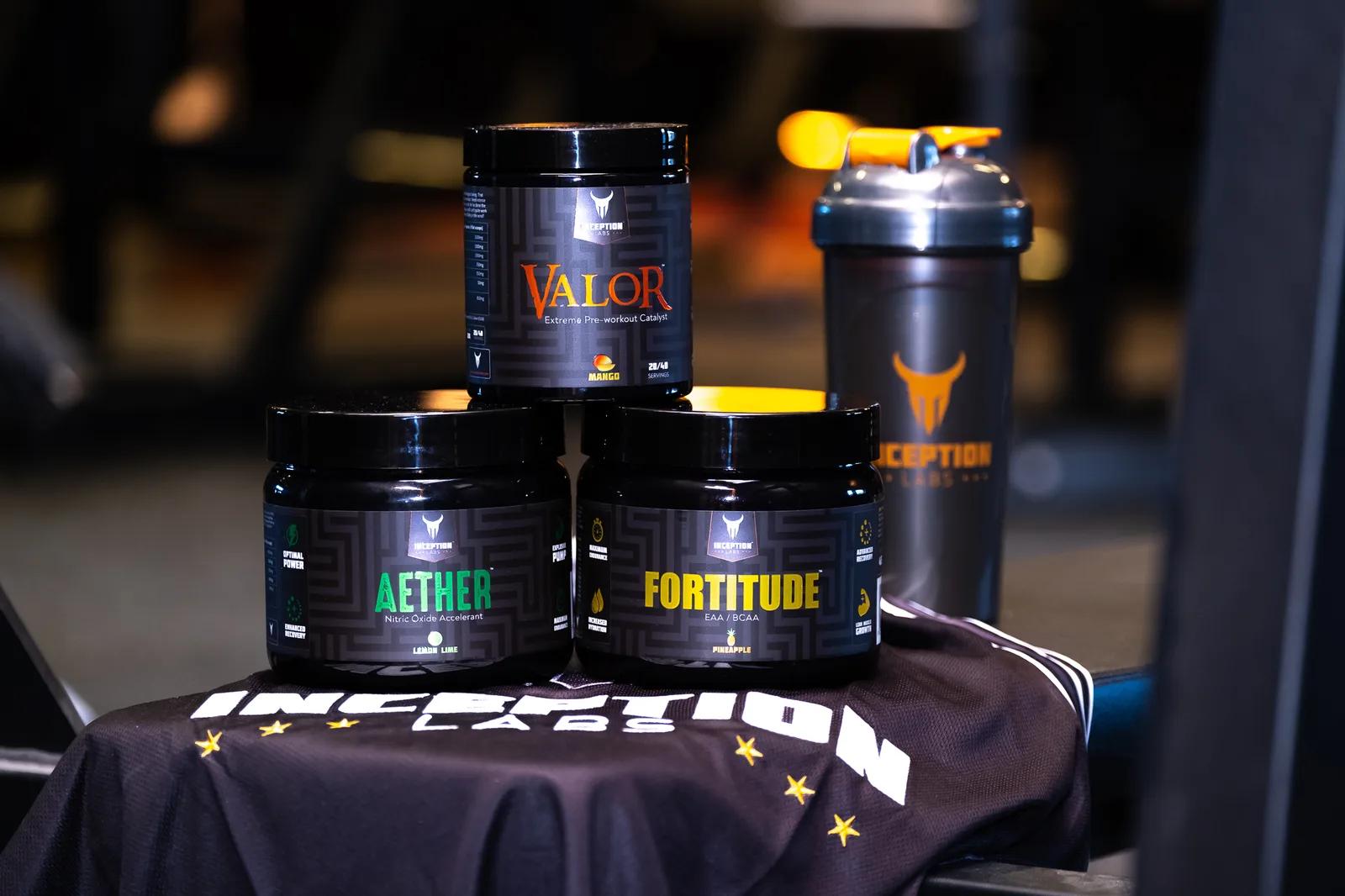
The supplements that actually work for most gym members are creatine monohydrate and protein powder. A properly dosed pre-workout earns its place for some people, and almost everything else is either context-specific or belongs in the skip pile.
I am Dr Matt Walley. I co-founded Inception Gym Christchurch with my wife Elise in 2022, and I run the Supplement Solutions store on our floor. I have watched a lot of members waste money on tubs that promise the world and deliver a tingle. This is the honest version I give people when they ask me at the counter.
Key takeaways
- Creatine monohydrate and protein powder have the strongest evidence and apply to almost everyone.
- Dose decides everything. An ingredient that works at 5g does nothing at 500mg.
- Proprietary blends exist to hide underdosing. Read the label; if the doses are not printed, walk away.
- Supplements fill gaps around good food and hard training. They do not replace either.
- Members at Inception get store pricing and can ask me or my staff face to face, not a chatbot.
Why the supplement industry has a credibility problem
Walk into any health store or scroll any fitness influencer's page and you get bombarded with products promising muscle, fat loss, energy and recovery. Most are underdosed, overhyped, and propped up by marketing budgets and paid testimonials.
The result is that most gym members land in one of two camps. They waste money on products that do nothing, or they write off supplements entirely and miss the handful that genuinely work. Both camps are reacting to the same problem: an industry that profits from confusion.
My job in this guide is to remove the confusion. What the science supports, why dosing matters, and why the way a supplement is formulated decides whether it earns a place in your routine or the back of your cupboard.
What are the supplements worth taking?
These are the ones with robust, replicated evidence. If you only ever buy from this section, you will not have wasted a cent.
Creatine monohydrate
If I could only keep one supplement for the rest of my life, it would be creatine monohydrate. It is the single most studied sports supplement in existence, with hundreds of peer-reviewed trials behind it.
What it does: creatine tops up your muscles' phosphocreatine stores, which regenerate ATP during high-intensity efforts. In plain terms, more reps, more power, faster recovery between sets, and over time more strength and more muscle.
Beyond performance: the newer research on creatine is where it gets interesting. It supports cognitive function under sleep deprivation and mental fatigue, and there is real momentum around its role in healthy ageing. That matters because the fastest-growing group on our floor is women and members over 40, and creatine is one of the most reassuring things I can hand them. It is not just for young men chasing a bench PB.
Dosing: 3 to 5 grams daily, every day. Loading (20g a day for 5 to 7 days) saturates stores faster but is not necessary. Consistent daily intake gets you to the same place within 3 to 4 weeks.
What to look for: the source matters. Creapure, made in Germany by AlzChem, is the gold standard. It is produced by chemical synthesis rather than animal byproducts, HPLC-verified for purity, and tested for contaminants. Cheap creatine from unverified sources can carry impurities like creatinine, dihydrotriazine and dicyandiamide.
Our own Inception Labs Creatine Monohydrate uses Creapure exclusively. Vegan, banned-substance tested, transparently dosed, and available at member pricing on-site. If you want the full picture, I go deeper in our creatine benefits guide.
Protein powder
Protein powder is not magic. It is food in a convenient form. Its entire value is making it easier to hit your daily protein target when time, appetite or a busy day get in the way.
Why protein matters: muscle protein synthesis needs adequate dietary protein. For people who train regularly, the evidence supports roughly 1.6 to 2.0 grams per kilogram of bodyweight per day. For an 80kg person that is around 128 to 160 grams daily.
Here is the part the industry does not want you to hear: food first. I would rather a member hit their target with chicken, eggs, dairy and legumes and use a scoop or two only to close the gap. This matters more than ever now that GLP-1 medications are changing how much people can eat in a sitting. If your appetite is suppressed, protein becomes the single most important thing to protect. I cover that specific situation in our guide to staying strong on GLP-1 medication.
Whey is the most studied and effective form for muscle protein synthesis thanks to its leucine content and rapid absorption. Whey isolate gives you more protein per serve with less lactose and fat than concentrate.
Our Inception Labs Collagen Whey pairs whey isolate with bovine collagen peptides, so you get muscle recovery from the whey and connective-tissue support from the collagen. Also at member pricing.
Pre-workout
Pre-workout is where the industry is at its worst. Too many products lean on excessive caffeine, artificial colours and proprietary blends that hide the actual doses. You feel a beta-alanine tingle and a caffeine rush and assume it is working. In reality a lot of pre-workouts are expensive caffeine pills with fairy dust on top.
What actually matters in a pre-workout:
- Caffeine (200 to 400mg): improves alertness, lowers perceived exertion, boosts power output. The dose should be stated, not buried in a blend.
- L-citrulline (6 to 8g): raises nitric oxide production for better blood flow and performance. Many products use citrulline malate at inadequate doses.
- Alpha-GPC (300 to 600mg): a nootropic that supports focus and the mind-muscle connection. This is the difference between a performance pre-workout and a stimulant bomb.
- Beta-alanine (3.2g): buffers hydrogen ions and delays that burning sensation. The tingle is a side effect, not a quality signal.
Our Inception Labs Valor Pre-Workout is built around these at proper doses: 350mg caffeine alongside Alpha-GPC for focus, every ingredient and amount printed on the label, no proprietary blends.
Which supplements are conditional?
These have evidence in specific contexts but are not universally necessary.
Fat burners (thermogenics)
Most fat burners are glorified caffeine pills with a marginal extra ingredient or two. A well-formulated thermogenic can give a modest bump to metabolic rate and energy expenditure, but only inside a structured training and nutrition plan.
Formulation decides usefulness. A stimulant-only fat burner spikes energy then crashes it. One that pairs thermogenic compounds with nootropics for sustained focus is a more honest tool for someone in a calorie deficit who needs the mental clarity to keep training hard. Our Inception Labs 1510 Fat Incinerator takes that nootropic-plus-thermogenic route and avoids the jitter-crash cycle. Available at member pricing.
Natural testosterone support
For men over 30, natural testosterone gradually declines. It is a normal process, but it can show up as slower recovery, lower energy, less motivation and difficulty holding lean muscle.
These supplements are not hormone replacement. They support the body's own production pathways through ingredients like ashwagandha, fenugreek and D-aspartic acid. The evidence is modest but positive for well-formulated products. Our Inception Labs Transcend Test Booster is aimed at men wanting natural support for strength, recovery, mood and lean muscle. At member pricing.
Body composition optimisation
For members chasing a specific shift in body composition, combining resistance training with targeted supplementation can help. Inception Labs Ichor is our most specialised product, a dual-action lean-muscle and fat-reduction formula at clinical dosing. It is not a starting point; it is for people who already have the basics locked in.
Which supplements can you skip?
- BCAAs: if you eat adequate protein, BCAAs add nothing. They are already in whey and whole foods. You would be paying twice for the same amino acids.
- Mass gainers: protein powder with added sugar and maltodextrin. Eat more real food and you get the same result for less money.
- Glutamine for muscle growth: it has roles in immune and gut function, but the muscle-building evidence in well-fed people is weak.
- Tribulus-only "test boosters": decades of marketing, and tribulus has consistently failed to raise testosterone in human trials.
Why formulation matters more than the brand on the tub
A supplement that will not tell you the dose is telling you the dose is too small to matter.
Clinical dosing
An ingredient that works at 5 grams does nothing at 500 milligrams. Plenty of companies include effective ingredients at sub-clinical doses purely so they can print them on the label without paying to include enough to do anything. Fairy dusting is endemic. Every Inception Labs product uses clinical doses, and the full amount is printed on the label. No proprietary blends. I built the range this way because I got tired of turning tubs around in the store and finding nothing but a blend and a promise.
Ingredient sourcing
Where an ingredient comes from determines its purity, potency and safety. Creapure creatine from Germany is not the same as generic creatine from an unverified supplier, even if the front of the tub says the same word.
Transparency
If a company will not tell you what is in the product and at what dose, that already tells you what you need to know. That is the one rule I would give a member walking into any supplement shop in the country.
Member pricing and real advice on the floor
This is where being owner-operated actually changes things for you. The Supplement Solutions store sits inside the gym at Tower Junction. Members get member pricing, and you can pick up what you need before or after your session instead of paying markup and shipping to an online retailer.
More importantly, you can ask a human. My staff know these products because they use them and because I trained them on the formulations. Pair any of this with our free body composition scans and you can actually see whether a stack is doing what it claims, which is a far better feedback loop than hoping. Book yours through the free body scan page, and browse the full range on the supplements page.
How to build your supplement stack
If you are new to this, start simple and add over time.
Stage 1: the foundation, for everyone
- Creatine monohydrate: 3 to 5g daily
- Protein powder: 1 to 2 serves daily, only as needed to hit your protein target
Run these two for at least three months before adding anything else. They have the strongest evidence and the broadest application.
Stage 2: performance
- Pre-workout: on training days, 20 to 30 minutes before your session, once your training is consistent
Stage 3: goal-specific
- Fat burner: during a structured fat-loss phase inside a calorie deficit
- Testosterone support: for men over 30 noticing recovery or energy changes
- Body composition optimiser: for those with specific lean-mass and body-fat goals
At every stage, pair supplementation with proper nutrition and consistent training. Supplements fill gaps; they do not replace the work.
Make better decisions
The supplement industry runs on confusion. The antidote is information and someone honest to ask.
Come and see the Supplement Solutions store at Inception Gym, Tower Junction, 65 Blenheim Road, Addington, Christchurch. My team will walk you through every product without the hard sell. If you are not a member yet, start with a free trial and come train on the floor, and if cost is on your mind, our membership options start at $18.90 a week.
For more, see the case for the best gym in Christchurch and the basics of gym nutrition.