Nutrition · Diet
Gym nutrition basics: what to eat before, during, and after training
Gym nutrition basics from Dr Matt Walley: what to eat before, during and after training, with food-first protein targets and honest advice from the Inception floor.
By Dr Matt Walley · 26 April 2025
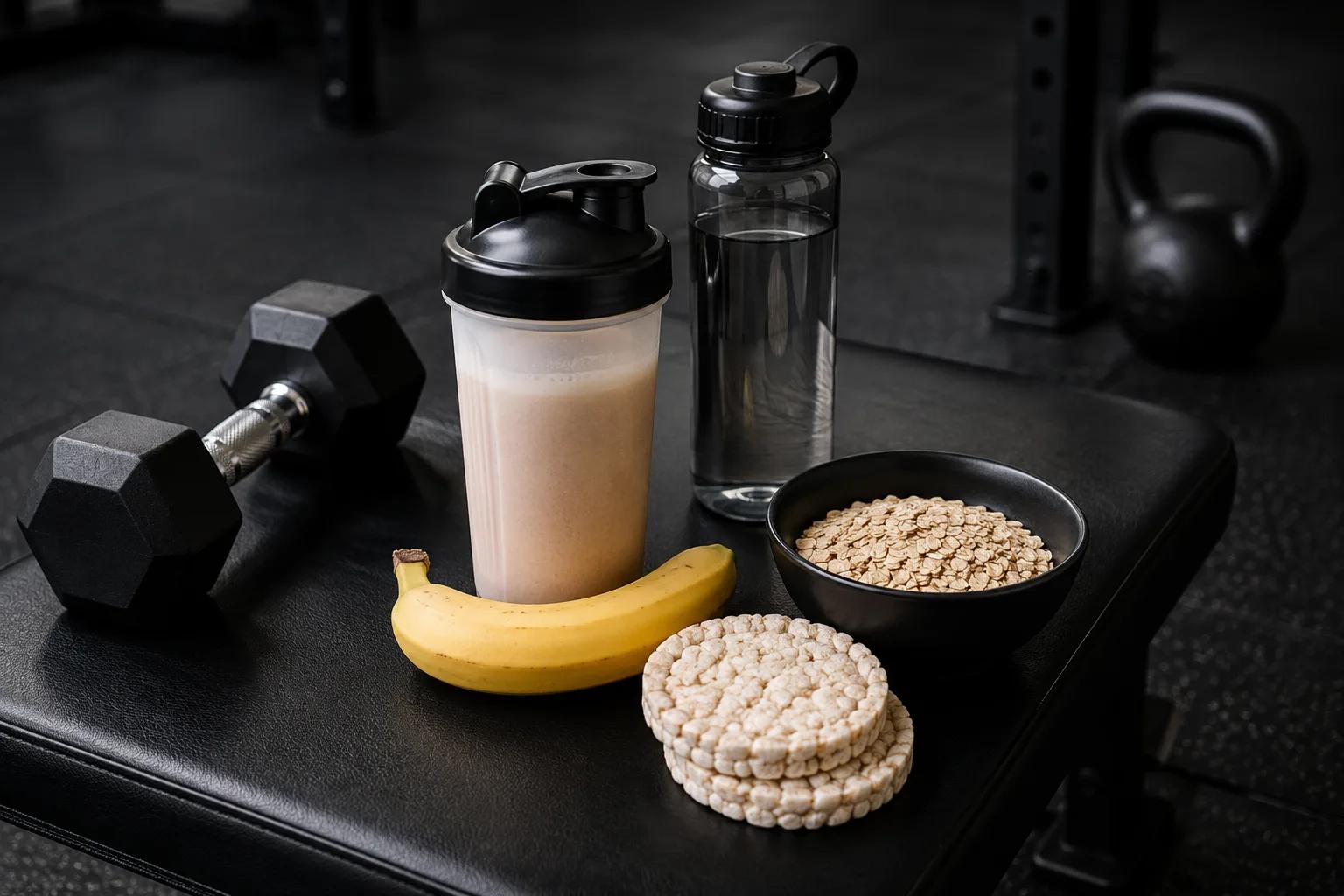
Gym nutrition basics come down to three things: eat a meal with carbohydrate and protein 2 to 3 hours before training, drink water through the session, and get 20 to 40g of protein within a couple of hours afterwards. Under all of it sits a daily protein target of 1.6 to 2.0g per kilogram of bodyweight, hit mostly with real food.
I am Dr Matt Walley, and my wife Elise and I have owned and run Inception Gym in Addington since 2022. I have a PhD, but you do not need one to fuel your training well. You need a handful of principles and the discipline to apply them week after week. This is the exact advice I give members on the floor when they ask me what to eat.
Key takeaways
- Protein target: 1.6 to 2.0g per kg of bodyweight per day, food first.
- Pre-workout: carbohydrate plus moderate protein, 2 to 3 hours out.
- Post-workout: 20 to 40g of protein within 1 to 2 hours, no 30-minute panic.
- Carbohydrate is fuel, not the enemy. Under-eating is a bigger problem than over-eating for most people I see.
- Supplements sit on top of a good diet. They never replace one.
What should you eat for gym nutrition?
Training hard is only half the equation. What you eat before, during and after your sessions decides how well your body performs, how quickly it recovers, and how much it adapts. The good news is that gym nutrition is not a mystery. Get the basics consistent and you have solved most of it.
Nine times out of ten, the member who tells me their results have stalled is not overtraining. They are under-eating protein and skipping meals, then blaming the programme.
That is the single most common pattern I see on our floor. People obsess over the perfect split and ignore the fact that they are eating 80g of protein a day and hoping for more muscle.
The macronutrient foundation
Before we get to timing, the three macronutrients and what each one actually does for your training.
Protein: the building block
Protein is made of amino acids, the raw material for muscle repair and growth. Every session creates micro-damage in the tissue, and repairing it is what makes you stronger over time. That repair needs adequate protein.
The evidence-based range for people training regularly is 1.6 to 2.0g of protein per kilogram of bodyweight per day. For a 75kg person that is roughly 120 to 150g daily. Most people eating a standard diet fall well short without paying deliberate attention.
My strong bias is food first. Chicken, beef, fish, eggs, dairy and legumes should carry the load, with a protein supplement filling the gap when real food is not practical, not the other way round. I watch members reach for three shakes a day while eating almost no whole protein, and that is backwards. A shake is a convenience, not a foundation. If you want the detail on hitting your number, I wrote a full protein intake guide.
Carbohydrates: performance fuel
Carbohydrates are the primary fuel for high-intensity training. During strength work and harder conditioning your body leans on glycogen, its stored carbohydrate, for energy. When glycogen runs low, performance drops, fatigue climbs, and the body starts pulling from muscle for fuel.
Carbohydrate needs scale with training volume and intensity. Someone training four to five hard sessions a week needs more than someone doing two easy ones. Blanket carbohydrate restriction is one of the most common mistakes I see, and it quietly wrecks training quality.
Fat: hormonal and sustained energy
Dietary fat is essential for hormone production, including testosterone and oestrogen. It also helps you absorb fat-soluble vitamins and fuels lower-intensity, longer-duration work. The key for gym-goers is not restricting fat so hard that hormonal function or recovery suffers. Good sources: olive oil, avocado, nuts, oily fish, eggs.
Pre-workout nutrition: what to eat before the gym
What you eat before training affects performance more directly than any other nutritional lever. The aim of a pre-workout meal is to arrive with available energy and amino acids circulating, and without a stomach that fights you mid-set.
Timing
The ideal pre-workout meal sits 2 to 3 hours before training for a full meal, or 30 to 60 minutes before for a smaller snack. That window allows partial digestion while keeping fuel available through the session.
Composition
A pre-workout meal should contain:
- Carbohydrate. The main fuel. Faster-digesting options if you are training within the hour, slower ones if you are eating 2 to 3 hours out.
- Moderate protein. 20 to 40g for circulating amino acids.
- Low fat, low fibre. Both slow gastric emptying and can leave you uncomfortable under load.
Practical examples for a full meal 2 to 3 hours before:
- Rice, chicken and vegetables
- Pasta with lean mince
- Oats with protein powder and fruit
Practical examples for a snack 30 to 60 minutes before:
- Banana with a scoop of protein powder
- Rice cakes with peanut butter
- Greek yoghurt with berries
Pre-workout supplements
A quality pre-workout can add energy and focus beyond what food gives you, taken 20 to 30 minutes before you start. My honest position: a pre-workout is a stimulus on top of a meal, never a substitute for one. I see people train fasted on a scoop of powder and wonder why they fade in the back half. Sort the food first, then decide whether a pre-workout earns its place.
Intra-workout nutrition
For most gym-goers on sessions under 90 minutes, eating during the session is not necessary. Water is enough. The exceptions where it matters:
- Sessions over 90 minutes at high intensity. Glycogen depletion becomes real, and fast carbohydrate (sports drink, a banana) can hold performance through the back half.
- Training fasted early. If you train first thing with no meal in you, a small carbohydrate source mid-session can offset the drop that comes with low glycogen.
- Endurance or concurrent training. Lifting and cardio in one long session raises carbohydrate demand enough to justify it.
For a standard 45 to 75 minute strength session, sort your pre-workout meal and carry a water bottle. That covers most of what happens on our floor.
Post-workout nutrition: the truth about the anabolic window
The post-workout window has been badly mythologised. The idea of a 30-minute anabolic window, where you miss all your gains if the shake is late, is an oversimplification of the research.
Here is what is accurate: muscle protein synthesis stays elevated for several hours after training, and adequate protein across that period supports recovery and adaptation. The window is hours long, not a 30-minute emergency. Nobody at Inception needs to sprint to the blender.
What to prioritise post-workout
- Protein. 20 to 40g of quality protein within 1 to 2 hours drives muscle protein synthesis while the muscle is receptive. A shake is convenient and effective, and a whole-food meal is just as good.
- Carbohydrate. Restoring glycogen matters, especially if you train again inside 24 hours. A meal with carbohydrate alongside protein covers both.
- Hydration. You lose fluid through sweat. Replacing it supports every recovery process, protein synthesis included.
Practical post-workout options:
- A protein shake on the way out, then a full meal within two hours
- Chicken, rice and vegetables as a complete meal
- Greek yoghurt with fruit and a handful of granola for something lighter
Nutrition for different training styles
Strength and muscle focus
Higher protein, moderate to high carbohydrate to support intensity, and enough total calories to build. The job is to supply the raw materials for adaptation: protein for repair, carbohydrate for energy and glycogen, calories above maintenance if you are chasing size.
Fat loss focus
A calorie deficit is required, but its composition matters. Keep protein high, toward the top of the range, to preserve lean mass. Too little protein in a deficit means you lose muscle alongside fat, which is counterproductive for how you look and metabolically expensive long-term.
This is exactly where our free body composition scans earn their keep. Members can see whether a deficit is costing them muscle or just fat, instead of trusting the bathroom scale. If you have not used one, book a free body scan and train off real numbers. If you are training on a GLP-1 medication, protecting muscle is even more critical, and I covered that in detail in our GLP-1 and strength training guide.
Endurance training
Higher carbohydrate demand than pure strength work. Training for events or sustained cardio needs real glycogen availability, so pre-loading carbohydrate before longer sessions and restoring it straight after matters more here than for a gym-focused lifter.
Common mistakes gym-goers make
Under-eating overall. Plenty of people train hard and eat too little to support it. Chronic under-eating lifts cortisol, blunts recovery, drops training quality, and eventually builds a hormonal environment that resists the very changes they want.
Protein at one meal only. Synthesis is better served by spreading protein across 3 to 5 meals than dumping it in one sitting. A post-workout shake does not rescue a day that was otherwise protein-poor.
Fearing carbohydrate. Low-carb diet culture has convinced a lot of good lifters to under-fuel. The result is worse performance, more fatigue and slower recovery. Carbohydrate is not the enemy. Poorly timed, excessive calories are.
Leaning on supplements without the foundation. Supplements work on top of good nutrition. Creatine, protein powder and pre-workouts do not compensate for a diet that does not support your training.
When to seek personalised support
The principles above are well-established and cover most people training at a normal intensity. Individual variation is real, though, and some situations call for tailored adjustment:
- Body composition goals that need precise calorie and macro tracking
- Specific medical conditions or dietary requirements
- Performance goals where marginal gains matter
- Genuine confusion about why the standard approach is not working for you
This is the advantage of the group Elise and I built. Inception Group runs Gym, Nutrition and Labs under one roof, so a member can pair a free body scan with PhD-led nutrition coaching that works from real data and your training demands, not a generic template. The combination of objective scan numbers and personalised guidance beats guesswork every time.
Getting started
The practical starting point:
- Eat a carbohydrate- and protein-rich meal 2 to 3 hours before training
- Have a protein source within 1 to 2 hours after training
- Make sure total daily protein hits 1.6 to 2.0g per kilogram of your bodyweight
- Eat enough total calories to support your training
Apply those four for 8 to 12 weeks before you judge the results. The fundamentals, done consistently, produce most of the gains available to you.
If you want to put this into practice, come and train with us. Our members rate Inception 5.0 across 1,090+ Google reviews, and I would back our floor and our people to help you get the fuelling and the training right together. Start with a free 7-day trial, or look over the membership options and pick the one that fits. Nutrition is not complicated once you know the principles. Apply them, stay consistent, and the results will follow.