Nutrition · Supplements
Pre-Workout Supplements: What Works, What Doesn't, and How to Choose
I run Inception Gym Christchurch and stock a pre-workout in our supplement store. Here is the science on pre-workout ingredients, clinical doses, and how to read a label before you buy.
By Dr Matt Walley · 24 January 2025
An effective pre-workout pairs a disclosed caffeine dose (3 to 6mg per kg of bodyweight) with clinically dosed support ingredients: 6 to 8g of L-citrulline, 3.2g or more of beta-alanine, and 300 to 600mg of Alpha GPC. If the label hides those amounts inside a proprietary blend, put it back on the shelf.
I am Dr Matt Walley. I co-founded Inception Gym Christchurch with my wife Elise in 2022, and we run a supplement store on the training floor, so I read pre-workout labels for a living. The pre-workout category is the most cluttered corner of sports nutrition in New Zealand. Dramatic names, aggressive branding, ingredient lists that look impressive until you check the actual doses. Most pre-workouts are underdosed, overhyped, and built around proprietary blends designed to hide how little active ingredient is in the tub.
Key takeaways
- Caffeine is the only ingredient with a large, consistent evidence base; everything else is supporting cast.
- Clinical doses matter more than the name on the tub: 6 to 8g citrulline, 3.2g+ beta-alanine, 300 to 600mg Alpha GPC.
- Proprietary blends exist to hide under-dosing. Fully disclosed labels only.
- Timing is 20 to 45 minutes before training, and not after roughly 4pm if you value your sleep.
- No pre-workout compensates for poor sleep, poor food, or arriving under-fuelled.
What should a pre-workout actually do?
A well-formulated pre-workout does four legitimate things:
- Increases energy and alertness for the session.
- Improves focus and mental drive through technically demanding movements.
- Enhances muscular endurance so you can sustain performance across more sets.
- Improves blood flow and cellular energy to meet the acute demands of training.
A pre-workout does not build muscle directly. It is a performance tool that lets you train with more intensity and focus, and over time that can translate into a better training stimulus and better results. Anything claiming beyond this framework (rapid fat loss, immediate size, hormonal enhancement) is overstating the evidence.
I have watched a member chase the fanciest tub on the shelf for six months and get nowhere, then switch to something honestly dosed and finally feel the difference on their last two sets. The tub was never the problem. The dose was.
The key ingredients
Caffeine
Caffeine is the most evidence-backed ergogenic substance you can buy without a prescription. It blocks adenosine receptors in the brain. Adenosine builds up during wakefulness and produces fatigue, so blocking it reduces perceived exertion, increases alertness, and supports sustained high-intensity performance.
The research on caffeine for strength, power, and endurance is extensive and consistent. Benefits include:
- Reduced perceived effort at a given intensity
- Improved time to exhaustion at submaximal loads
- Enhanced peak power output in strength and sprint tasks
- Improved reaction time and cognitive performance
Effective dose: 3 to 6 milligrams per kilogram of bodyweight. For an 80kg person, that is 240 to 480 milligrams per session. The lower end is enough for trained users with a regular caffeine habit. Habitual users build tolerance, which blunts the effect over time.
What to look for on labels: the specific milligram amount. Any product listing caffeine without disclosing the dose, or hiding it in a proprietary blend, deserves scepticism.
Anhydrous vs natural caffeine: both work. Some products combine anhydrous (fast-absorbing) with naturally sourced caffeine (slightly slower) for a smoother onset and to soften the crash.
L-citrulline
L-citrulline is an amino acid that converts to L-arginine in the kidneys, which is then used to produce nitric oxide. Nitric oxide is a vasodilator: it relaxes blood vessel walls and increases blood flow to working muscles, improving oxygen and nutrient delivery during exercise.
The practical effect is a pump, and that is not just aesthetic. Better blood flow supports lactate clearance and nutrient delivery, which helps endurance and recovery between sets.
Effective dose: 6 to 8 grams of L-citrulline, or an equivalent amount as citrulline malate (citrulline combined with malic acid).
Why so many products under-dose it: citrulline is expensive per effective dose. Products that include it at 1 to 2 grams are including it for label appeal, not performance.
Beta-alanine
Beta-alanine is a precursor to carnosine, which buffers acid accumulation in muscle during high-intensity work. During intense sets, hydrogen ions build up and produce that burning sensation. Higher muscle carnosine delays it, extending how long you can sustain effort before the burn forces a stop.
Effective dose: 3.2 to 6.4 grams daily. Beta-alanine has to be taken consistently over several weeks to build muscle carnosine; the acute pre-workout dose feeds that chronic saturation.
The tingle: at adequate doses, beta-alanine causes paraesthesia, a harmless tingling in the skin, often in the face, neck, and hands. It is not an allergic reaction, just a benign and well-understood side effect. Products with beta-alanine that produce no tingle at all are almost certainly under-dosed.
Alpha GPC (alpha-glyceryl phosphoryl choline)
Alpha GPC is a choline compound that crosses the blood-brain barrier and raises acetylcholine, a neurotransmitter central to focus, muscle contraction, and the mind-muscle connection under load.
In an exercise context, research shows:
- Improved peak power output, particularly in lower-body movements
- Enhanced focus and alertness that complements caffeine
- Potential growth hormone secretion effects at higher doses (600mg+)
Effective dose: 300 to 600 milligrams. Alpha GPC is often included at 50 to 100 milligrams, enough to print on the label but not enough to do much. Check the specific milligram amount.
Betaine anhydrous
Betaine (trimethylglycine) is found in beets and supports creatine synthesis, and may improve muscular endurance and strength through osmotic cell hydration. Studies show modest but consistent improvements in endurance, strength output, and body composition. It is a supporting ingredient, not a primary driver.
Effective dose: 2.5 grams.
L-theanine
Theanine is an amino acid in green tea that promotes alpha-wave brain activity: a calm alertness distinct from the jittery arousal high-dose caffeine alone can produce. Caffeine paired with L-theanine is one of the most studied nootropic combinations, and it produces better sustained focus than caffeine alone with less anxiety.
Effective dose: 100 to 200mg, usually at a 1:2 ratio with caffeine (for example, 200mg caffeine with 200mg theanine).
What should you avoid in a pre-workout?
Proprietary blends
A proprietary blend lists ingredients as a group with a total combined weight, without disclosing individual amounts. Something like: "Explosive Matrix: L-Citrulline, Beta-Alanine, Alpha GPC, L-Theanine, 3000mg."
That is meaningless. Six ingredients at 3000mg total could be 2900mg of the cheapest one and trace amounts of everything else. Proprietary blends exist to hide under-dosing. Choose products with fully disclosed labels where every ingredient shows its individual milligram amount.
Stimulant cocktails with no nootropic support
Some pre-workouts are just very high-dose caffeine with minimal support. They give a strong initial spike, then a crash, more anxiety in some users, and wrecked sleep if taken in the afternoon. Look for products that pair stimulants with focus support (Alpha GPC, theanine) and recovery support (citrulline, beta-alanine).
Excessive caffeine claims
350mg of caffeine is a strong, effective dose for most adults. Products advertising 400 to 500mg-plus per serving as a selling point are not necessarily more effective than a properly formulated 300 to 350mg product, and they carry more cardiovascular stress, sleep disruption, and anxiety risk. Know your tolerance and choose accordingly. This is where our free body composition scans earn their keep: when I can show a member their resting heart rate trend alongside their training, they stop treating more caffeine as a proxy for more progress.
The pre-workout on our floor: Inception Labs Valor
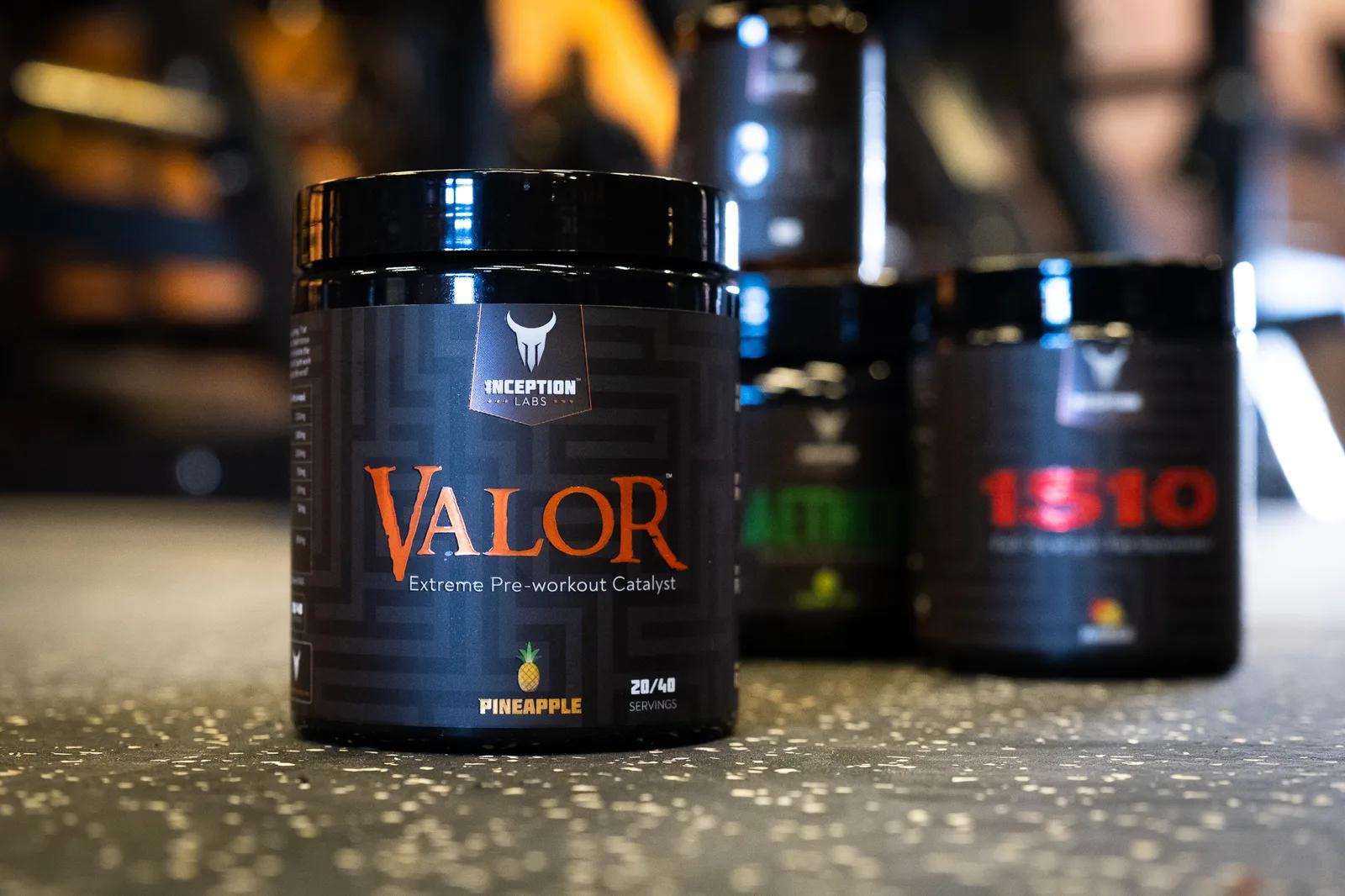
The pre-workout in our Supplement Solutions store at Inception Gym is Valor, made by Inception Labs, part of the same Inception Group as the gym. Valor runs 350mg of caffeine with Alpha GPC as the key cognitive performance drivers, formulated for sustained energy and nootropic-led focus without the jitters or a sharp crash.
I am not neutral about this, and I will say so plainly: as an in-house Inception Labs product, Valor reflects the same standard I hold the whole range to, which is fully disclosed dosing and no proprietary-blend games. That is precisely why I stock it and not the skull-on-the-tub imports. Member pricing applies at the on-site store, and the staff can talk you through the formulation rather than reading the marketing copy back at you. You can see the full product details at inception-labs.com.
If you want to try the floor and the store before committing to anything, grab a free trial and come in during staffed hours.
When should you take pre-workout?
Take most pre-workouts 20 to 45 minutes before training. That gives caffeine time to reach peak plasma concentration, which lands around 60 minutes after ingestion.
Do not take it too late in the day. Caffeine has a half-life of around 5 to 6 hours in most adults. A 350mg dose at 7pm means roughly 175mg is still active at midnight. We are open 24 hours, so plenty of our members train late, and this is the single most common self-inflicted mistake I see: a big stim pre-workout at 8pm, then confusion about why sleep and recovery have fallen apart.
For sessions after 4pm, consider a lower-dose option or a caffeine-free approach built on citrulline, theanine, and non-stimulant performance compounds.
Pre-workout vs a good nutritional foundation
A pre-workout cannot fix inadequate sleep, poor nutrition, or arriving under-fuelled. It adds margin at the edges of an already solid foundation; it does not replace the foundation. Turning up having eaten well, hydrated, and slept seven to nine hours will beat turning up exhausted and leaning on a scoop to paper over the basics.
Food first, always. Get a small dose of carbohydrate in before you train and you will feel the pre-workout do its job far more cleanly. For the wider picture, see our gym nutrition basics guide, and for a structured plan, Inception Nutrition runs PhD-led coaching that ties supplement timing to your overall nutrition and body composition goals.
FAQ
Should I cycle my pre-workout?
Caffeine tolerance develops with consistent use. Taking one to two days off per week (usually non-training days) and a full break of one to two weeks every two to three months can partly reset it. It is not a safety requirement, just a performance strategy if you notice the effect fading.
Can I use pre-workout on an empty stomach?
Caffeine on an empty stomach can cause nausea in some people and a sharper, less sustained energy curve. A little carbohydrate before your session improves both tolerance and effect. A banana, some oats, or a rice cake 30 minutes out is plenty.
Will pre-workout affect my sleep if I train in the morning?
A morning pre-workout at standard caffeine dosing has minimal effect on sleep if you have normal caffeine metabolism and finish well before noon.
Is pre-workout safe?
Pre-workout supplements are generally safe for healthy adults at labelled doses. People with cardiovascular conditions, anxiety disorders, or caffeine sensitivity should approach high-stimulant products with caution and check with their GP if unsure. Pregnant or breastfeeding people should avoid caffeine-containing pre-workouts.
Putting it together
A well-formulated pre-workout with clinically dosed caffeine, citrulline, beta-alanine, Alpha GPC, and supporting ingredients is a legitimate performance tool. The phrase "well-formulated" rules out most of what is on the market. Read labels, check doses, avoid proprietary blends, and choose products made by people who understand the science.
For members here, the Supplement Solutions store carries Inception Labs products at member pricing, with staff who can speak to the formulations rather than the hype. If you want to see the floor, the store, and the scan setup for yourself, take a free trial or book a free body composition scan, and we will get you sorted from there.
For related reading, see our post on creatine benefits and dosing and our guide to supplements that actually work.